
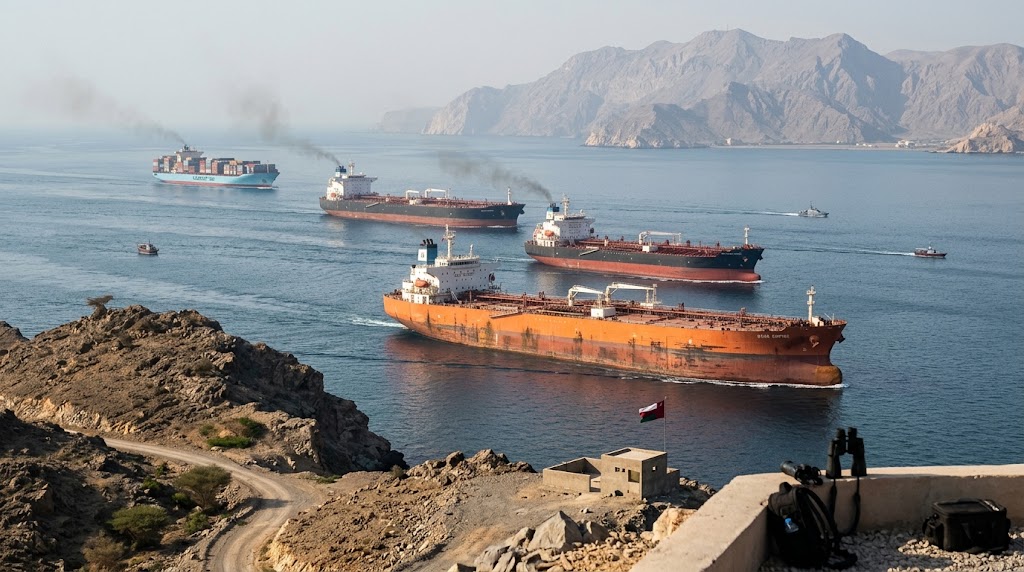
Iran’s Hormuz Proposal Rejected as Global Energy Risks Persist
Iran is keeping the door open to negotiations after U.S. President Donald Trump rejected Tehran’s proposal to reopen the Strait of Hormuz and halt fighting in the Middle East. The development leaves one of the world’s most important energy shipping routes at the centre of a diplomatic standoff with consequences that extend well beyond the region.
Iranian Foreign Minister Abbas Araghchi said on September 27 that Tehran’s conditions for reopening the strait remained unchanged and that only a negotiated settlement could break the deadlock. Iran had presented its proposal through Qatari mediators during the United Nations General Assembly in New York.
The situation remains fluid, and it is not yet clear whether the latest exchange will lead to renewed negotiations or further military and economic pressure.
What happened
Iran proposed a framework that would lead to the reopening of the Strait of Hormuz within seven days if its conditions were met. The proposal was also linked to a halt in fighting and wider negotiations.
Trump rejected the proposal publicly on September 26, saying Iran wanted the waterway reopened immediately because it was under economic pressure.
Iran, however, said the U.S. position had not yet been formally communicated through the mediators involved in the discussions. Araghchi said Tehran would wait for the definitive U.S. position before deciding how to respond.
That difference is important: Washington has publicly rejected the proposal, while Tehran says the diplomatic channel has not necessarily been formally closed.
Why the Strait of Hormuz matters
The Strait of Hormuz is a narrow waterway between Iran and Oman connecting the Persian Gulf with the Gulf of Oman and the Arabian Sea.
It is one of the world's most important energy chokepoints. U.S. Energy Information Administration data shows that oil flows through the strait averaged about 20.9 million barrels per day during the first half of 2025 — roughly one-fifth of global petroleum liquids consumption.
The International Energy Agency has also described the disruption around Hormuz as a major global oil-market shock. The agency says the waterway normally carries around 20 million barrels a day of crude oil and petroleum products.
The impact is not limited to oil. Around one-fifth of global LNG trade has also historically passed through Hormuz, with Qatar accounting for most of the LNG shipped through the route.
For countries in Asia, the issue is particularly significant. China, India, Japan and South Korea have historically been among the largest destinations for oil moving through the strait.
What we know so far
Several facts are clear as of September 27:
Iran has proposed a diplomatic framework involving the reopening of the Strait of Hormuz.
Tehran says reopening the waterway would depend on specific conditions being met.
The proposal was transmitted to the United States through Qatari mediators, according to Iranian officials.
Trump has publicly rejected the proposal.
Iran says it is still waiting for a formal U.S. response through the diplomatic channel.
The Strait of Hormuz remains a critical route for global oil and LNG shipments.
Shipping through the waterway has been heavily disrupted during the conflict.
Recent shipping data reported by Reuters showed that crude oil exports through Hormuz reached about 33.7 million barrels during the week beginning September 20, while traffic remained far below normal levels.
The International Maritime Organization has separately warned about the safety of seafarers affected by the continuing situation. It said in September that around 20,000 seafarers, along with port workers and offshore crews, were being affected in the region.
The wider impact
For ordinary consumers, the biggest concern is energy.
When oil supply routes become less reliable, the effects can spread through fuel markets, aviation, shipping, manufacturing and transportation. Higher energy costs can eventually increase expenses for businesses and households.
Asian economies are especially exposed because much of the oil and LNG historically transported through Hormuz is destined for Asian markets.
India is among the countries worth watching closely because of its significant dependence on imported crude oil. Any prolonged disruption could affect refinery economics, fuel costs and the country's broader energy-import bill.
European countries can also be affected indirectly. Competition for LNG cargoes can intensify when supplies from the Persian Gulf are disrupted, potentially increasing pressure on gas markets.
The shipping industry faces another problem: avoiding the region can mean longer routes, higher fuel consumption, increased insurance costs and delays.
What officials are saying
Iranian Foreign Minister Abbas Araghchi said Tehran's conditions for reopening the Strait of Hormuz remained clear and that a negotiated solution was necessary.
Trump, meanwhile, publicly rejected Iran's proposal and argued that Tehran was seeking an agreement to reopen the waterway while under significant pressure.
These positions leave substantial uncertainty about whether the diplomatic contacts can produce another round of negotiations.
Neither side's public statements should be treated as evidence that a broader settlement has been reached.
What happens next
The immediate issue to watch is whether U.S. and Iranian intermediaries continue communicating despite Trump's public rejection.
The role of Qatar and other regional mediators could become important if both sides decide to keep the diplomatic channel open.
Markets will also be watching shipping volumes through Hormuz, crude prices, LNG availability and insurance costs for vessels operating in or near the region.
Any sustained improvement in shipping could ease pressure on energy markets. Conversely, further disruption could increase concerns about supply, transportation costs and inflation.
The bigger picture
The Strait of Hormuz has become more than a regional security issue. It is now a test of how quickly diplomacy can reduce pressure on one of the world's most important trade routes.
The waterway's importance means that developments between Washington and Tehran can quickly become relevant to countries thousands of kilometres away.
For now, the key question is not simply whether Hormuz can reopen. It is whether the diplomatic channels surrounding the strait can produce conditions that allow commercial shipping to return to something closer to normal.
The answer will matter to governments, shipping companies, energy producers and consumers across the world.