
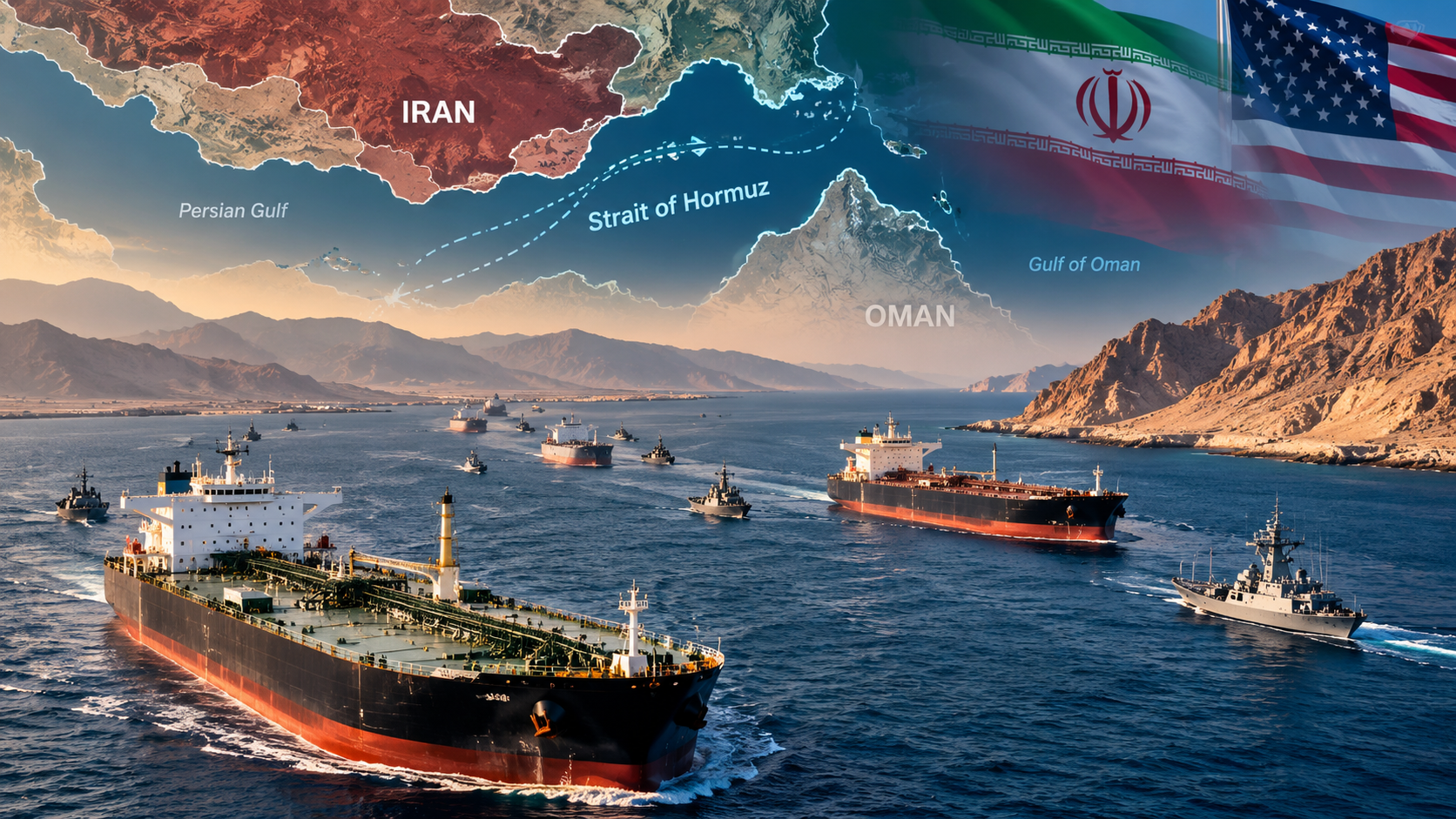
Iran’s 7-Day Plan to Reopen Strait of Hormuz: Why the World Is Watching
Iran has put forward a seven-day plan aimed at reopening the Strait of Hormuz, placing one of the world's most important shipping routes at the center of international diplomacy.
Iranian Foreign Minister Abbas Araqchi said on September 25 that Tehran had presented the United States with a concrete proposal. Under the proposal, normal maritime passage through the strait could be restored within seven days if the required conditions were met.
The development comes as the Middle East conflict continues to affect regional security, energy transportation and international diplomacy.
Why the Strait of Hormuz matters
The Strait of Hormuz is a narrow waterway connecting the Persian Gulf with the Gulf of Oman and the Arabian Sea.
It is particularly important because large volumes of energy supplies move through the region. Any prolonged disruption can therefore have consequences far beyond the Middle East.
For consumers and businesses around the world, changes in shipping conditions can influence:
Oil and fuel prices
International shipping costs
Transportation expenses
Inflation
Energy security
Global financial markets
That is why governments and markets are closely following developments around the waterway.
What Iran is proposing
Iran says its seven-day framework could allow the Strait of Hormuz to return to normal maritime passage.
According to reporting on the proposal, Tehran has linked the reopening to broader issues involving the conflict, U.S. sanctions and negotiations over Iran's nuclear program.
The proposal does not represent a completed agreement. Its implementation would depend on negotiations and whether the parties accept the conditions involved.
The United States is now a key part of the equation
The proposal puts Washington in a central position.
The United States and Iran remain deeply divided over the conflict and Iran's nuclear activities. Any agreement involving the Strait would therefore require difficult diplomatic negotiations.
The situation is also being watched closely by other countries whose economies depend on stable energy supplies and international shipping.
China is watching closely too
The issue has also entered discussions between the world's major powers.
U.S. President Donald Trump and Chinese President Xi Jinping discussed the Middle East conflict during their September 25 meeting, according to Reuters reporting. China has major energy interests in the region, making stability around the Strait particularly important for Beijing.
This means the Strait of Hormuz is not simply a regional issue. Its future could affect diplomacy between several of the world's largest economies.
What could happen next?
The immediate focus will be on whether diplomatic negotiations can produce an agreement that allows commercial shipping to return to normal.
Several questions remain open:
Will the United States accept Iran's proposed framework?
Can the parties agree on the conditions required to reopen the waterway?
Will shipping companies feel confident enough to resume normal operations?
How will energy markets respond if the disruption continues?
These questions could become increasingly important in the coming days.
Why ordinary people should care
A conflict thousands of kilometres away can still affect people at home.
Oil and shipping costs influence transportation, manufacturing and the prices of many goods. If energy transportation becomes more expensive or uncertain, businesses can face higher costs, which can eventually affect consumers.
At the same time, a successful diplomatic agreement could reduce some of that uncertainty.
A situation that could change quickly
The Strait of Hormuz story is still developing. Iran has put forward its seven-day proposal, but the proposal is not the same as an agreement.
The next stage will depend on diplomatic decisions in Washington, Tehran and other regional capitals.
For now, the world is watching a narrow waterway with an enormous influence on global trade and energy security.